


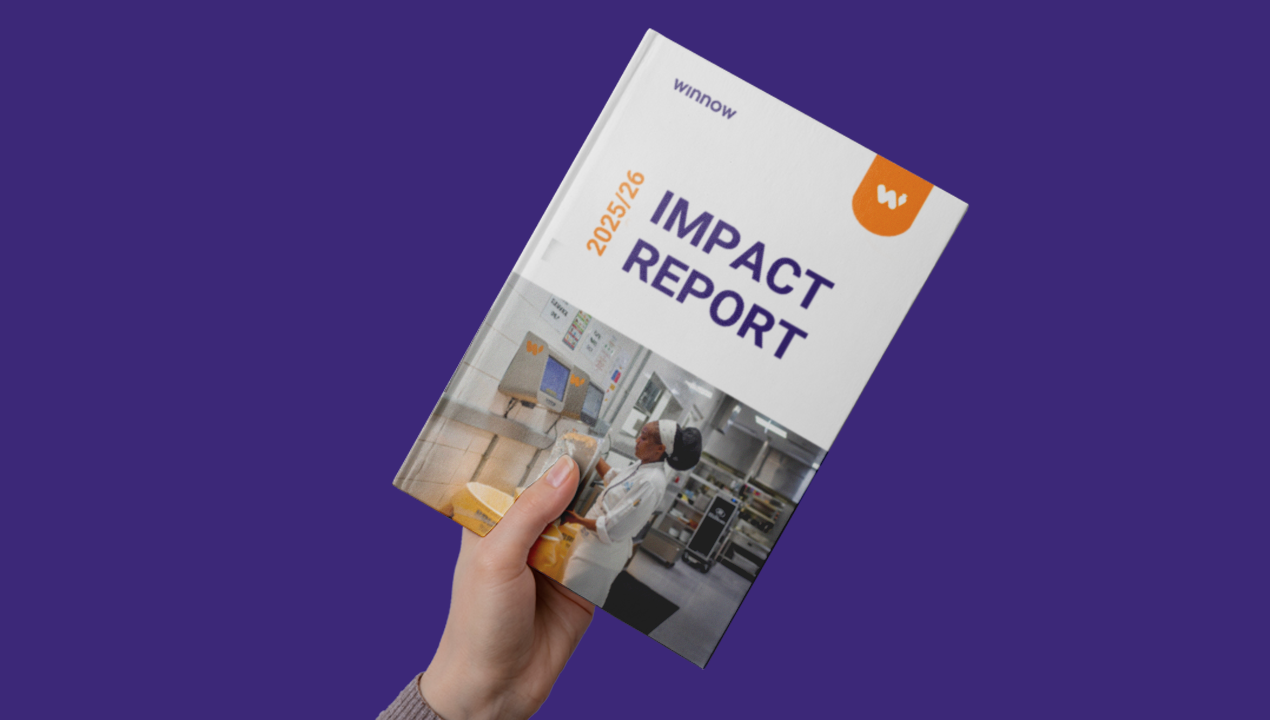
Winnow has published its 2025/26 Impact Report. This year, hospitality businesses running Winnow's AI food waste technology crossed $100 million saved in food costs every year, across more than 3,500 locations in over 100 countries. The report also uncovers a measurement gap still costing the industry money, and lays out what Winnow is doing next to close it.
A milestone built by chefs
$100 million is not a projection or a marketing number. It is the sum of individual decisions, made daily, by chefs and kitchen teams across 3,500-plus hotels, resorts and restaurants who chose to look at what they were throwing away - and change it. Winnow's technology weighs and photographs food waste as it happens, then turns that into daily insights a kitchen can act on. Multiply that across 100-plus countries, and the savings add up to real money back in operating budgets, at a time when most hospitality businesses need every margin point they can find.
To mark the milestone, Winnow asked chefs around the world to share their best zero-waste dish, through a competition called 100 Recipes for $100M. More than 150 zero-waste recipes came back, built from the kind of scraps that usually end up in the bin. The winning dish, Hash Brown Gnocchi with Mushroom Ragout, was made from leftover hash browns, button mushrooms and cheese ends. It is a small but critical reminder that most food waste is not spoiled or inedible.
But $100M in food cost savings isn't the only number Winnow's report celebrates. For every tonne of carbon equivalent emissions Winnow's own operations emit, its customers now save 82 tonnes, up from 63:1 in 2024 and 48:1 in 2023. And the AI behind all these numbers keeps getting sharper: Winnow's database now holds more than 1 billion food waste images, each one training the system to recognize what is being thrown away, and why, with more precision than the year before.
Why hospitality is still leaving billions on the table
None of that changes a harder fact the report also surfaces. Food prices could rise by as much as 18% by the end of 2026, according to research from Helios AI and AgFunder, and most hospitality businesses are not positioned to absorb that. Winnow surveyed more than 140 hospitality operators across Europe and North Africa this year to find out how prepared the industry actually is, and discovered that 70% of operators underestimate how much food they waste. 40% are not measuring food waste at all.
How Winnow is closing the measurement gap
So whilst Winnow is celebrating the $100 mllion milestone, we also recognise there's more work to be done. The 2025/26 Impact Report highlights where we're investing, to help more kitchens around the world reduce their food waste. Two hospitality veterans joined Winnow's Advisory Board this year, Gregory Maliassas of Driftwood Hospitality Management and Paul Whetsell of CapStar Hotel Company, bringing 75 years of combined hotel and resort experience to how Winnow scales across large portfolios. Will Meadows joined as our new Head of Product.
The next number
$100 million was the first milestone. Winnow's stated goal has not changed since the company was founded: help the hospitality industry save $1 billion in food costs every year. Getting there means closing the measurement gap this year's research uncovered, one kitchen at a time, with sharper AI and the right people behind it.
The 2025/26 Impact Report lays out the full data behind all of it: the regional breakdown of the measurement gap, the technology roadmap, and the team driving toward $1 billion.
Download Winnow's 2025/26 Impact Report here to see the complete picture.



Comment on my blog