


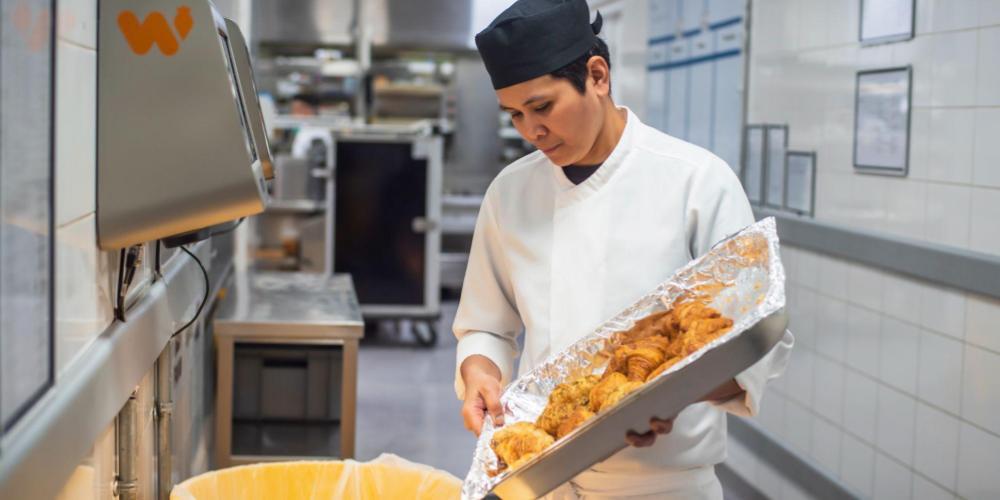
Hospital foodservice teams are stretched. Between tight budgets, staff shortages, and rising food costs, every decision counts. Efficiency isn’t just a goal, it’s a necessity.
And yet, one of the biggest opportunities for cost savings and operational impact is often overlooked: food waste.
Up to 20% of food purchased in commercial kitchens is wasted. For hospitals, this translates to significant hidden costs. But forward-thinking foodservice teams are proving that food waste is a solvable problem, and that reducing it can deliver results fast.
Real-world impact: How Salem Health cut food waste by 33%
At Salem Health, a dual-service hospital in Oregon, the kitchen team knew food waste was a problem. But with manual logs and little visibility, they struggled to take action. That changed when they implemented Winnow, using AI and real-time data capture to track what was being thrown away and why.
“We recognized we had an excessive amount of waste but couldn’t pinpoint the cause. When we came across Winnow, it was the obvious choice to solve this.”— Kevin Offield, Foodservice Analyst, Salem Health
The results were immediate:
- 33% reduction in food waste by value
- Full ROI within 17 weeks
Weekly waste reports became part of the kitchen’s routine. The team used them to review top waste items, distinguish one-off mistakes from recurring issues, and bring insights back to frontline staff.
“Being able to meet on that every single week and then take those results and talk to the frontline staff really helps out.”
One standout change came with salmon. The team began transforming trimmings, previously discarded, into dishes like smoked salmon cream cheese, salmon cakes, and protein-rich salads. The result: 65% less salmon waste.
[Read the full Salem Health case study]
Why hospitals should act now
Food waste reduction offers a rare combination of fast financial return and high environmental value. Hospitals are seeing ROI in under six months, which is crucial for stretched budgets.
Winnow works with existing kitchen teams and processes, requiring no extra staff or major system overhauls. It also supports broader sustainability goals by cutting carbon emissions and aligning with public health values. For food waste initiatives the right tools and tailored support are making change possible.
Food waste is a solvable challenge
Even in the toughest catering environments, with the right data, support, and a clear process, hospital kitchens can reduce food waste, ease pressure on staff, and stretch budgets further. As foodservice leaders look for smarter ways to do more with less, food waste reduction stands out as one of the fastest, simplest, and most impactful steps hospitals can take today.




Comment on my blog