


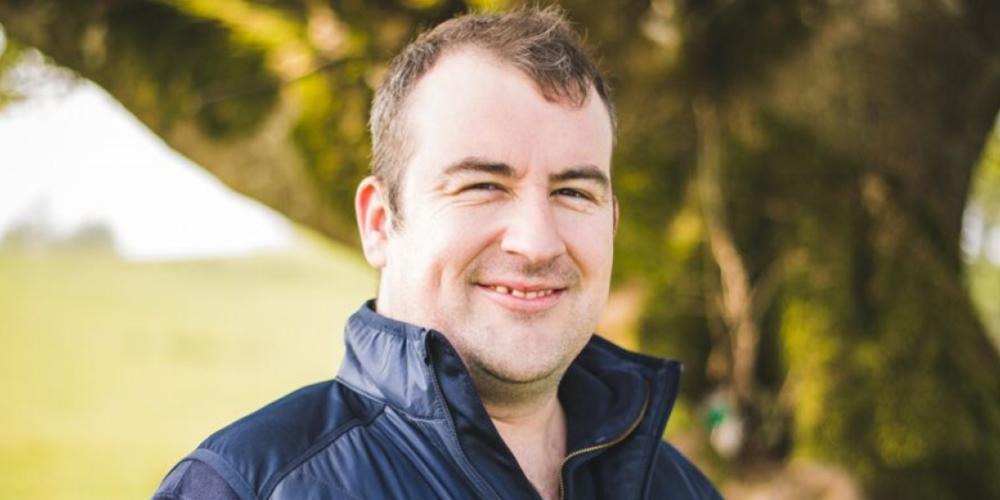
This month on Pass It On, we’re spotlighting Chef Jonathan Keane, Executive Chef at The Lodge at Ashford Castle in Ireland. A passionate forager with deep roots in the west of Ireland, Jonathan brings a strong sense of place to everything he cooks. With an open-minded approach and a focus on practical change, he has achieved remarkable results, including a 90% reduction in trimmings and a 58% reduction in total food waste.
Read on to discover the experiences, lessons, and simple ideas driving real impact in his kitchen.
From Passion to Plate
How did your culinary journey begin? What inspired you to be a chef?
I started when I was 15 in a small village called Letterfrack on the west coast of Ireland. I was stacking shelves in a shop and washing pots in the kitchen, but I was drawn to the energy of it all, the hustle and bustle, the chaos. I always liked cooking, even as a child, and I preferred working to being in school. I worked my way around the west of Ireland, went to catering college, and just stayed with it. Over time, everything became about food. Growing up on a farm, growing our own vegetables, and later becoming a forager all shaped how I see ingredients today.
What would your final meal be?
It would be new potatoes, straight out of the ground, with Irish butter and sea salt. When new potatoes are in season, every other potato dish disappears for me. I’d probably have lamb as well, something simple like what we had growing up, with cabbage from the garden. It’s not complicated food, but it’s honest and it’s tied to where I’m from.
What changed your view on food waste?
It wasn’t one big moment, it was gradual. Foraging played a big role because you start to see nature differently. You notice what’s happening around you, and you respect ingredients more. Then when we brought Winnow into the kitchen, I started to really see the data. I would always have said I knew what was going into the bin, but the numbers told a different story. What stood out was the scale of trimming waste. We had over a tonne a year just from fruit and veg trimmings. That’s when I realised small things, repeated every day, are actually the big problem.
Ingredients of Success
What are your key ingredients for success?
Drive, ambition, and probably a bit of stubbornness. I like things to be done properly. But open-mindedness is just as important, especially when you’re trying something new. If you’re not open to change, nothing improves. Once you are, things start to make sense very quickly.
What’s the most valuable advice you’ve received in your career?
Less is more. When I was younger, I had dishes with 15 or more elements on the plate. You think that’s what makes something great. But over time, you realise it’s about doing a few things properly. That thinking carried into how I approached food waste. Instead of trying to fix everything, I focused on a couple of impactful recipes and built from there.
What’s the biggest challenge you’ve overcome?
Changing mindset, both my own and the team’s.When something like Winnow comes in, the first reaction is resistance. You think, we already know what we’re doing. But once you get past that and start engaging with it, you realise how much opportunity there is.
Even something like removing cling film from the kitchen felt like a big challenge. Everyone said it wouldn’t work. But we stopped buying it, and we adapted.
What keeps you motivated?
My family. I have four kids, and I want to leave the planet in a better place for them. That’s what drives me now.At some point, you stop asking what you can get from your career and start asking what you can give back.
Proof in the Pudding
What’s your proudest achievement in reducing food waste?
The scale of the results. We reduced trimmings by 90% and overall food waste by 58%. Most of that came from focusing on fruit and vegetable waste. We created simple but impactful recipes. For vegetable trimmings, we make a treacle by turning scraps into a stock, reducing it down, and using it across dishes like sauces and bread.For fruit waste, especially from breakfast, we make a fruit tonic using skins and trims. We now produce around 100 litres a week, which is served across the hotel.
Bite-Sized Pro Tip
What’s one piece of advice for chefs aiming to reduce food waste?
Be open-minded. If you approach it with the attitude that you already know everything, you won’t get anywhere. Give it a chance, make a few small changes, and build from there.If everyone does a little, nobody has to do a lot.
Creative Fuel
Where do you find inspiration beyond the kitchen?
I look at what other chefs are doing, especially on platforms like LinkedIn and Instagram. There’s a lot of great thinking around food waste now. People like Vojtech from Winnow and chefs like Douglas McMaster are doing interesting work. But for me, it’s not about copying recipes. It’s about stepping back and looking at your own kitchen .How are you working? What are you throwing away? What could you do differently? It always comes back to a sense of place and respecting what you have around you.




Comment on my blog