


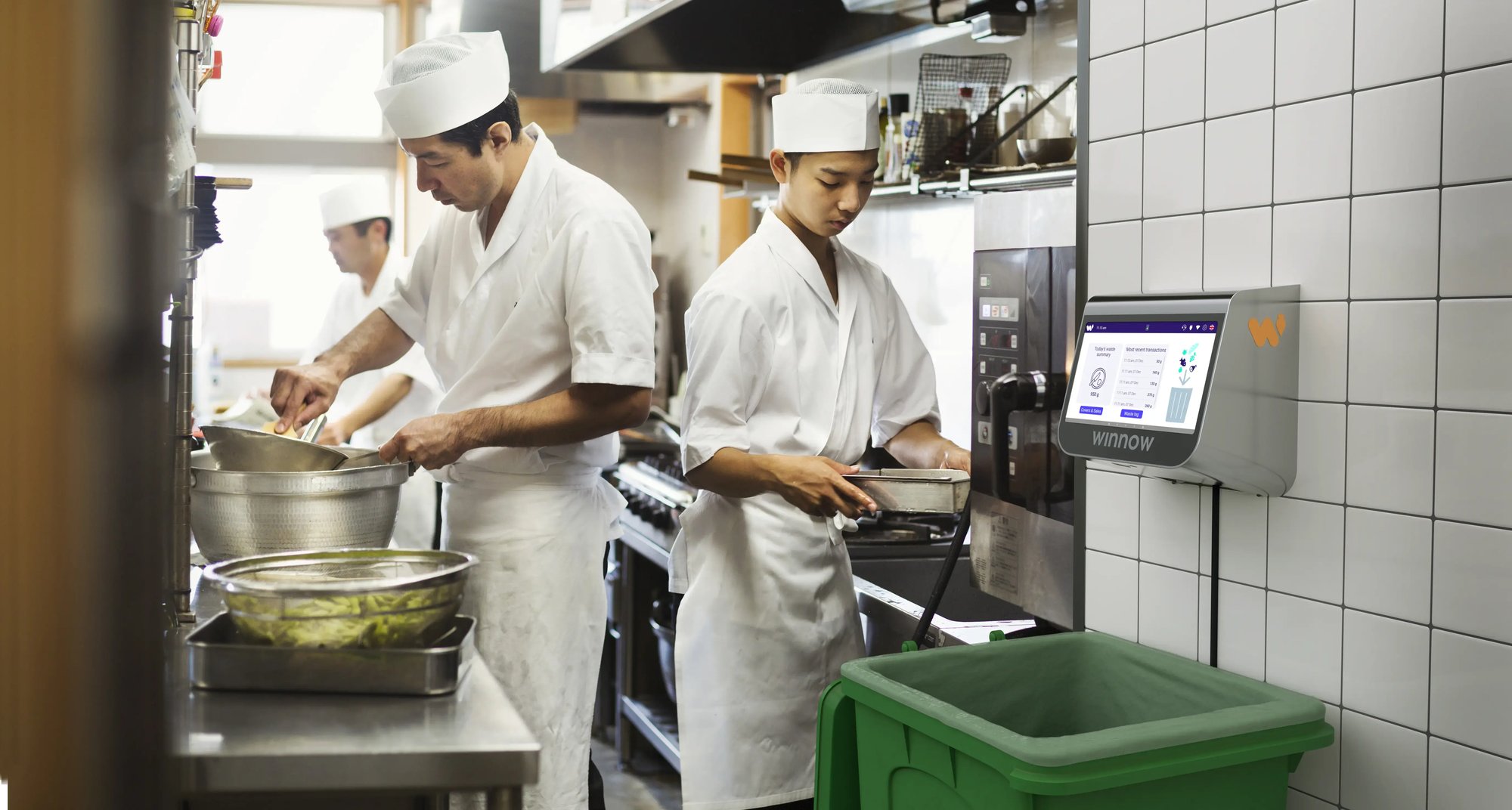
A food waste management system records what gets thrown away in a kitchen, identifies the causes, and turns that data into operational decisions about production, menus, and purchasing. The right system fits inside the existing kitchen flow without adding manual work, generates reliable data, and produces insights the team will actually act on. Winnow is an AI-based food waste prevention system used in 3,500+ kitchens globally that captures waste automatically through AI vision, with no manual input. Buyers should evaluate solutions across five dimensions: measurement method, analytics, operational fit, scalability, and supplier support.
Key facts
- Most kitchens have no clear visibility into waste because tracking it is operationally expensive
- Three system types exist: manual, semi-automated, and AI-based
- The main trade-off is operational effort versus data quality
- Five evaluation dimensions: measurement, analytics, operational fit, scalability, supplier support
- Implementation success depends more on operational change than on the technology
Why do kitchens need food waste prevention technology?
Most professional kitchens have no clear visibility into their waste. Without measurement, it is hard to know which dishes are routinely overproduced, which processes generate avoidable trim, and how much waste is impacting food cost.
Winnow's 2025 baseline data from 180 resort kitchens puts average food waste at 191g per cover. Across resort operations, 12% of all food purchased is wasted. For a 250-room resort with a $3.5 million food spend, that is $420,000 per year going straight in the bin. Technology turns a hidden problem into actionable data that hits efficiency and profitability directly. Sustainability reporting is a useful by-product. The operational visibility is the primary value.
The regulatory context
For kitchens in Spain or planning for EU compliance, the technology choice also has a regulatory dimension. Spain's Ley 1/2025, enforceable from April 2026, requires a formal Food Waste Prevention Plan with quantified targets and tracked data. The EU's revised Waste Framework Directive will require prevention programmes across member states by mid-2027. Manual logging will not generate audit-ready data at the scale those requirements demand. Digital measurement is no longer an optional upgrade for affected operators - it is the practical path to compliance.
What types of food waste tracking systems exist?
Three categories of system are typically evaluated.
Manual systems use paper or spreadsheet-based logs. They require constant team discipline, carry high operational overhead, and produce low data accuracy.
Semi-automated systems pair scales with manual data entry. Staff classify the waste at the bin. Higher accuracy than manual, but still user-dependent.
AI-based systems provide automatic food identification, faster and more consistent recording, less operational friction, and higher data quality.
The main trade-off is between operational effort and data quality. The less manual input required, the higher the consistency and the faster adoption sticks in the kitchen.
What capabilities should buyers evaluate?
Measurement: how is waste recorded?
The recording method determines data quality. Things to evaluate: manual versus automated recording; classification accuracy; time required per log; disruption to the kitchen flow.
Key questions: Does the system interrupt service? Is classification manual or automatic? How reliable is the data?
Automatic recording with no manual intervention typically delivers the lowest friction and the highest adoption in high-volume kitchens.
Analytics: turning data into decisions
Measurement is only useful when the data drives action. A strong system provides daily waste visibility, trends by food type, clear financial impact, and analysis by dish or station.
The real value comes from helping the chef decide what to adjust the next day.
Operational fit: will the team actually use it?
Many systems fail in practice because they do not fit inside the kitchen flow. Critical factors include time per log entry, system complexity, language barriers, and hardware location.
In professional kitchens with high turnover, simplicity is decisive. If the system requires extra effort, adoption falls fast. For seasonal resort kitchens with annual staff resets, look specifically for systems that store historical data so incoming teams can access previous benchmarks from day one.
Scalability: does it work across multiple kitchens?
For hotel groups and contract caterers, scalability is essential. Evaluate cross-site reporting, performance benchmarking, process standardisation, and portfolio-level visibility.
Supplier support and success programmes
Technology alone does not reduce waste. Sustained results require initial training, ongoing coaching, performance reviews, and team activation. Success depends as much on the operational change as on the tool.
How is success measured once a system is live?
When a system works well, the changes are visible in the operation: overproduction drops, planning improves, production becomes more precise, food cost decreases.
Typical results:
- 2% to 8% reduction in food cost
- Used in 3,500+ professional kitchens globally
- Over $100 million in food waste prevented every year
The impact comes from data-led decisions. Recording waste alone does nothing on its own.
How Winnow works in professional kitchens
For high-volume kitchens, the system most operators adopt is VisionAI with Throw & Go. Staff throw food away the way they normally would, and the system identifies and weighs each item automatically through AI vision - no scanning, no manual category selection, no workflow change. Daily and weekly reports surface the highest-cost waste items, and the Winnow Hub analytics platform lets multi-site groups compare kitchens and track corporate reduction targets.
Conclusion
Choosing a food waste measurement system is an operational decision that affects kitchen efficiency directly. Beyond the technology, success depends on:
- How well the system fits inside the kitchen workflow
- How reliable the data is
- How actionable the insights are
Choosing a food waste prevention solution means finding a system that adapts to the operation, generates consistent data, and supports long-term behaviour change.
Winnow supports 3,500+ professional kitchens globally, combining automatic recording with no manual intervention with actionable analytics that help teams prevent food waste daily.
Further reading
See what Winnow can do in your kitchen. Request a demo →




Comment on my blog