


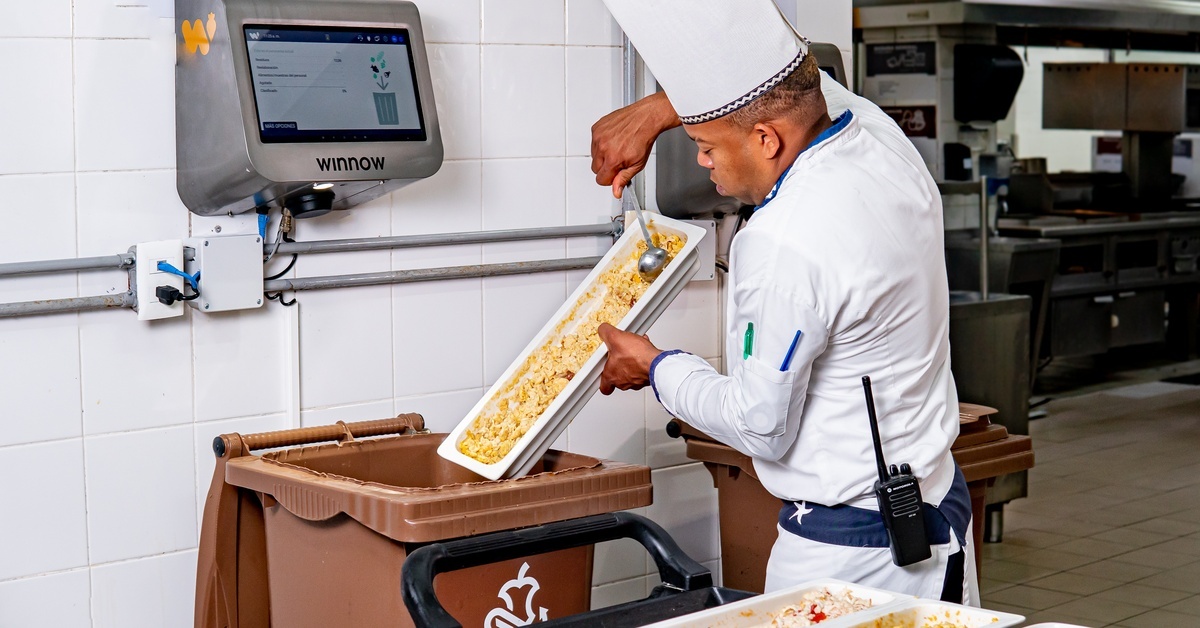
A food waste prevention plan in an all-inclusive resort works by making waste visible inside the kitchen flow, identifying where overproduction concentrates, and turning that data into daily production decisions. Resorts using Winnow typically cut food cost by 2% to 8% with this approach. Royalton CHIC Cancun by Blue Diamond Resorts cut food waste 56% in six months at one of its buffets, saving $165,000 a year.
The seven steps below are informed by how leading resorts have built and scaled their programmes - and from the frameworks detailed in Winnow's new practical guide, produced in collaboration with easyJet holidays and UN Tourism.
Download the full guide: A Practical Guide to Reducing Food Waste in Resorts
Key facts
- Resort kitchens using Winnow typically see 2% to 8% reductions in food cost
- Royalton CHIC Cancun cut food waste 56% in six months at Elements Gourmet Buffet, saving $165,000 a year
- The biggest waste driver in all-inclusive resorts is buffet overproduction, not preparation trim - overproduction accounts for 23% to 57% of total kitchen waste (Winnow)
- The plan works when the executive chef leads it and finance is aligned from day one
- On average, resort kitchens waste 12% of all food purchased - equivalent to nearly half a plate of food per guest at every meal (Winnow, 2025 baseline data from 180 resorts)
- Programmes typically scale from one buffet to multiple properties within 12 months
How to reduce food waste in all-inclusive hotels and resorts
Reducing food waste in all-inclusive hotels and resorts is one of the biggest operational challenges in destinations like Mexico and the Caribbean. These properties typically run with:
- High-volume buffets
- Variable occupancy
- Multicultural kitchen teams
- High staff turnover
- Pressure on operating margins
- Growing ESG reporting expectations
In Spain and across the EU, the pressure is now regulatory too. Spain's Ley 1/2025 requires hotels and resorts to reduce food waste by 50% by 2030 and to maintain a formal Food Waste Prevention Plan - enforceable from April 2026. The EU's revised Waste Framework Directive sets a 30% reduction target across member states by 2030. For resort operators, that makes food waste a compliance question, not just a sustainability one.
In this context, food waste becomes a question of operational efficiency, food cost control, and - increasingly - legal risk.
At Royalton CHIC Cancun, the team began measuring waste at Elements Gourmet Buffet and cut it by 56% in six months. As General Manager Luis Quintero explains: "Our guests perfectly understand the intention behind waste reduction. They're more informed and committed to the environment."
Why do resorts generate more food waste than other hotels?
All-inclusive resorts produce more waste than other hotel formats because of how their kitchen operations are structured. Three factors weigh especially heavily.
Visual abundance expectation in buffets. Buffets must stay full through service. To avoid running out, kitchens produce more than is needed.
Demand variability. Food consumption shifts with guest activities or whether guests spend less time on property. That variability makes accurate forecasting hard.
Multiple kitchens. Most resorts run a main buffet, specialty restaurants, and a central kitchen. Without shared waste data, each area produces with its own safety margin.
A 2025 survey of 140+ easyJet holidays hotel partners found that 70% of operators underestimated the volume of food waste they were generating, and 40% were not measuring it at all. The same survey found that 56% of operators cited guest behaviour as their biggest barrier to reduction - yet Winnow data shows that the majority of controllable waste originates in the kitchen, not on the guest's plate.
In the Royalton CHIC Cancun pilot, the data quickly identified buffet overproduction as the dominant waste driver. The kitchen could then act on it.
How to build a food waste prevention plan in all-inclusive hotels (step-by-step)
A waste reduction plan needs a structured approach that fits inside the kitchen flow.
Step 1: Pick a critical area and define how impact will be measured
Start where waste hits the operation hardest, usually the buffet restaurant. From the start, define which indicators will measure the pilot's result, for example:
- Buffet waste reduction
- Food cost optimisation
- Production planning adjustments
At Royalton CHIC Cancun, the project began at the resort's highest-volume buffet and expanded gradually. One of the early operational adjustments was switching chilaquiles from large pre-made batches to live cooking based on real demand at the station.
Step 2: Measure before you reduce
Recording waste makes three things visible: which foods get thrown away, when the trim happens, and which areas generate the largest losses.
Step 3: Identify the main causes
After several weeks of measurement, identify the largest waste sources. Winnow data across resort kitchens shows the typical breakdown:
- Overproduction: 23% to 57% of total waste
- Preparation trim: 20% to 42%
- Spoilage: 1% to 5%
- Plate waste: 7% to 36%
The implication is practical: most of the opportunity sits in overproduction and trim - both within the kitchen's direct control.
Step 4: Set kitchen-specific objectives
Each kitchen can carry specific targets, such as cutting overproduction or improving production planning. The targets need to map back to the indicators set in Step 1.
Step 5: Assign operational ownership
The executive chef should lead the initiative so it lives inside daily operations rather than sitting outside them.
Step 6: Use data to adjust production
The data drives three decisions: how much to produce, when to replenish, and which menu items to adjust. This cuts waste while keeping the guest experience and service quality intact. As Executive Chef Freddy Chi at Royalton CHIC Cancun puts it: "Waste becomes an opportunity. We transform overproduction into gourmet dishes like ravioli or cannelloni - it's creativity guided by data."
Step 7: Share results and align leadership
Sharing results with general management, finance, and sustainability keeps the initiative funded, embedded, and ready to expand.
Common mistakes resorts should avoid
The patterns that derail waste reduction programmes are consistent:
- Trying to reduce waste without measuring it
- Treating it only as a sustainability initiative
- Not involving general management
- Starting pilots without clear success criteria
- Failing to align the initiative with finance
- Pushing all responsibility onto the kitchen team without leadership backing
Your next 30 days
Starting does not require a full programme. Winnow's practical guide recommends five actions you can take within a month:
- Identify internal champions (Head Chef, Sustainability Lead, F&B Director)
- Conduct an initial assessment of current measurement practices
- Explore digital measurement options and initiate a pilot
- Map the data inputs needed for a formal prevention plan
- Brief senior leadership using the financial case
For the full framework - including the food waste hierarchy, regulatory compliance guidance, and Iberostar's four-phase prevention plan in detail - download A Practical Guide to Reducing Food Waste in Resorts, produced in partnership with easyJet holidays and UN Tourism.
How resorts measure waste in practice with Winnow
For high-volume resort buffets, the system most operators adopt is VisionAI with Throw & Go. Staff throw food away the way they normally would, and the system identifies and weighs each item automatically through AI vision, with no scanning, manual category selection, or workflow change. Daily and weekly reports surface the highest-cost waste items, and the Winnow Hub analytics platform lets multi-property groups compare sites and track corporate reduction targets.
For all-inclusive resorts running multiple kitchens at scale, this combination is what delivers the 2% to 8% food cost reduction Winnow customers see.
Conclusion
If you're evaluating how to structure a pilot in your resort, the first step is simple: make the waste visible. Once it's visible, the operational decisions that drive the savings become obvious to everyone in the kitchen.
Sources and further reading
See what Winnow can do in your kitchen. Request a demo →




Comment on my blog