


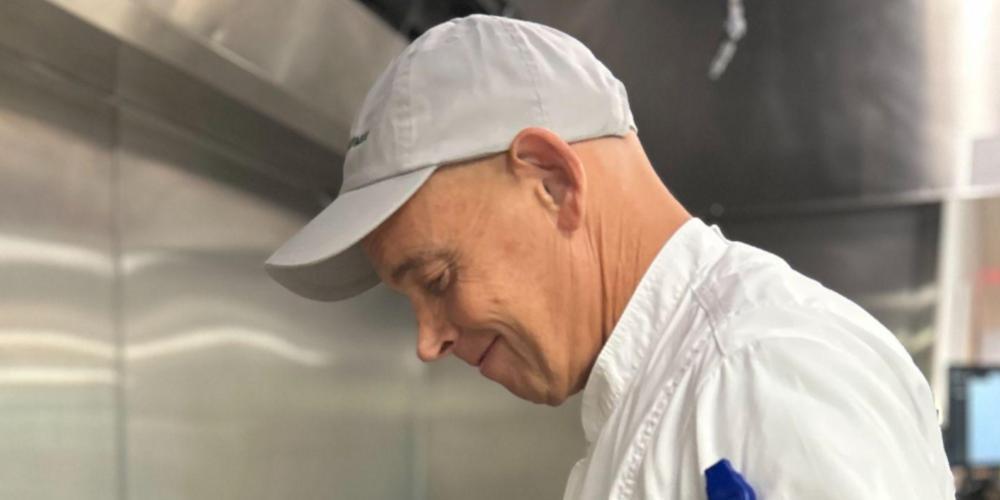
Takeda is a global biopharmaceutical company focused on delivering transformative treatments while creating exceptional experiences for patients and communities. At Takeda’s regional office café in Massachusetts,Takeda Café 300, Executive Chef Douglas Albrecht is leading a powerful transformation in food waste reduction. Since adopting Winnow in 2021, Albrecht’s team has cut food waste weight by an impressive 68%. Operated by Guckenheimer, a leading American food services provider, the café has become a standout example of culinary impact.
The Chef Behind the Change
Albrecht’s culinary career began in 1982 as a prep cook. He holds an Associate Degree in Culinary Arts, a Bachelor’s Degree in Food Service Management, and an MBA in Hospitality Management, all from Johnson & Wales University. Over three decades, he worked in high-volume restaurants across the Northeast U.S., developing a deep understanding of operations and efficiency. Since joining Guckenheimer in 2016, he has served as Executive Chef with a mission to elevate food quality, streamline kitchen practices, and embed sustainability into everyday operations.
Making Waste Visible
“I’ve seen a lot of food get wasted over the years,” Albrecht says. “You see it with your eyes, but when the data is in front of you,daily reports, actual numbers,it becomes something you can’t ignore.”
Winnow gives Albrecht’s team real-time visibility into what’s being wasted and why. Daily email summaries and dashboard insights highlight top wasted items, overproduction trends, and prep inefficiencies. These insights are shared with the team regularly and turned into specific actions, from refining portion sizes to improving trimming techniques and fine-tuning inventory orders.
From Data to Daily Practice
.jpg?width=467&height=830&name=Doug1%20(2).jpg)
Guided by Winnow’s data, Albrecht and his team have implemented a wide range of waste-reduction strategies. Hands-on training has improved fruit and vegetable trimming techniques, while portions have been adjusted to reflect actual consumption. Food trimmings are creatively repurposed into new offerings, like carrot peel chips, carrot top pesto, and infused waters from fruit scraps. Each is a simple, scalable, and sustainable menu addition.
Daily waste briefings ensure the entire team stays informed and accountable. Meanwhile, surplus meals are packaged and sold in the café’s 24/7 micro market, further reducing overproduction. “We try to utilize everything before it gets tossed,” Albrecht says. “Some days, there’s nothing left over at all.”
As a result of these focused actions, the team has achieved a 68% reduction in food waste by weight, saving over 13 tonnes of food, the equivalent of 32,000 meals a year. Their efforts have also prevented 55 tonnes of CO₂e emissions and delivered an annualized reduction in waste value of $16,000.
Beyond the Plate
The kitchen’s impact goes beyond food waste. Sustainability is communicated through digital signage, daily interactions, and infrastructure choices. A recent renovation replaced gas equipment with energy-efficient electric alternatives, further reducing the café’s environmental footprint.
These changes reflect Takeda’s broader sustainability goals and resonate with both clients and guests. “It lowers our food costs, reduces subsidies for the client, and shows we care,” Albrecht explains.
Advice for Fellow Chefs
With more than 40 years in the industry and a reputation for building efficient, principled kitchens, Albrecht’s advice is clear:
“Treat food waste like a cost center. Track it, understand it, and manage it with the same discipline you apply to labor and inventory.”



Comment on my blog